As An Intern In Israel

I got off the plane at Ben Gurion Airport and I thought to myself, what am I doing here? After hours of inching along in traffic from Tel Aviv to Jerusalem, I finally arrived to the stone-floored Aish dorms situated in the heart of the Old City. I set my things down in the musty dormitory room, took a tour of the premises, and was positive the crusaders lived in better accommodations, over 900 years ago.

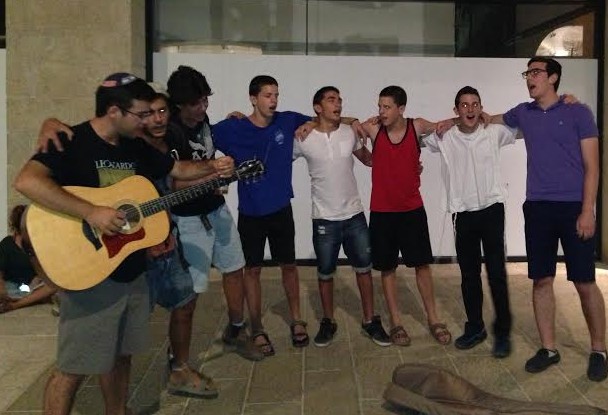
My friends that I study with pray together while I play the guitar. The bond we have developed is indescribable.

My friends that I study with pray together while I play the guitar. The bond we have developed is indescribable.

It’s been 3 months since I arrived in Israel to study at Aish HaTorah and work at an internship. Jinternship found me a position working at the Society For The Protection of Nature, where I would be traveling around Jerusalem and the West Bank to take surveys of gardens. You’d think coming from the Garden State I’d be a natural, but dodging traffic to count olive trees wasn’t exactly the internship experience I was looking for. The next internship thankfully was a winner. I stumbled upon BOMAH-Brand Of Milk And Honey. A young Israeli named Itzik runs and founded the social media branding firm. He studied at Sapir College in Sderot, which at the time was under tremendous rocket attack from Gaza. He reported what was going on in Sderot via his Facebook and Twitter account and was able to get the word out when major news channels didn’t care about rockets hitting Sderot or Israel. It continues to impress me that Itzik was able to find a way of using the tragedy at Sderot to build himself a career.

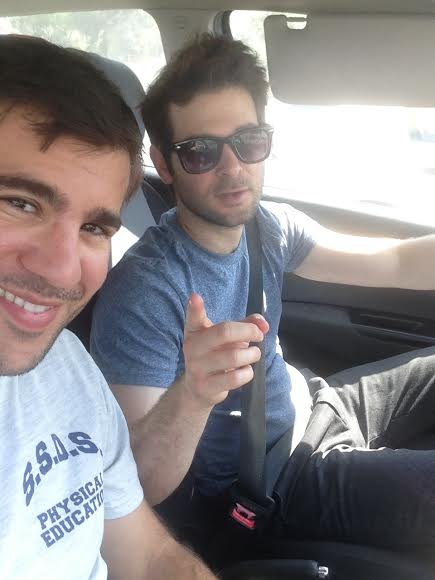
Itzik and I on our way to give a presentation to one of BOMAH's clients

Itzik and I on our way to give a presentation to one of BOMAH’s clients

This internship has been a win-win because I bettered my social media skills, while contributing to an organization that supports and fights for Israel. I was able to share the truth about the IDF and respond to enemies of Israel by a few clicks at a laptop. My Zionist beliefs have been strengthened during the war in Israel this summer, called ‘Operation Protective Edge,’ and my commitment to stand up for Israel in any arena that may exist has been vitalized.

Vacationing in Israel and donating to Jewish organizations are very helpful, no doubt. But moving to Israel and contributing to its society is the strongest act of Zionism in a world that needs Zionist leaders. Anyone looking for a positive internship experience in social media, I highly recommend visiting BOMAH. Thank you Itzik Yarkoni and Rachel Jetter for your guidance and help during my time working here.

To My Future Boss - Check Out My Pictures in Africa!

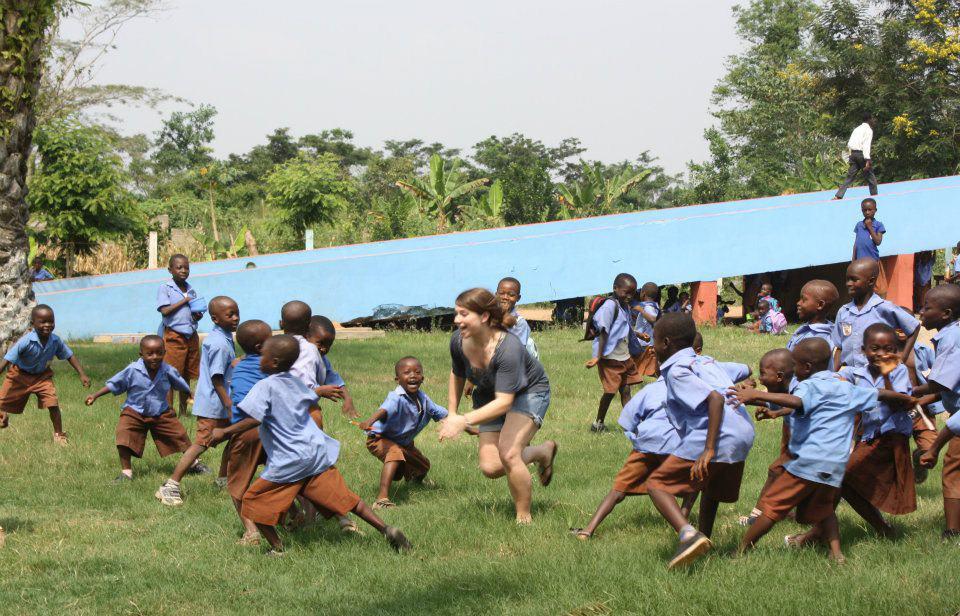
As a member of American, white, upper-middle class privileged society, I have engaged in many trips of what we call “voluntourism” – short-term opportunities where I paid to volunteer in a developing country or with disadvantaged communities overseas. I took pride in how I chose to spend my school breaks, how I challenged myself to immerse in and understand a culture not my own. In order to remember the people I worked with and the relationships I built, I naturally took pictures on my I-phone and of course, I posted them to Facebook.

418364_2956509515128_1104590172_n

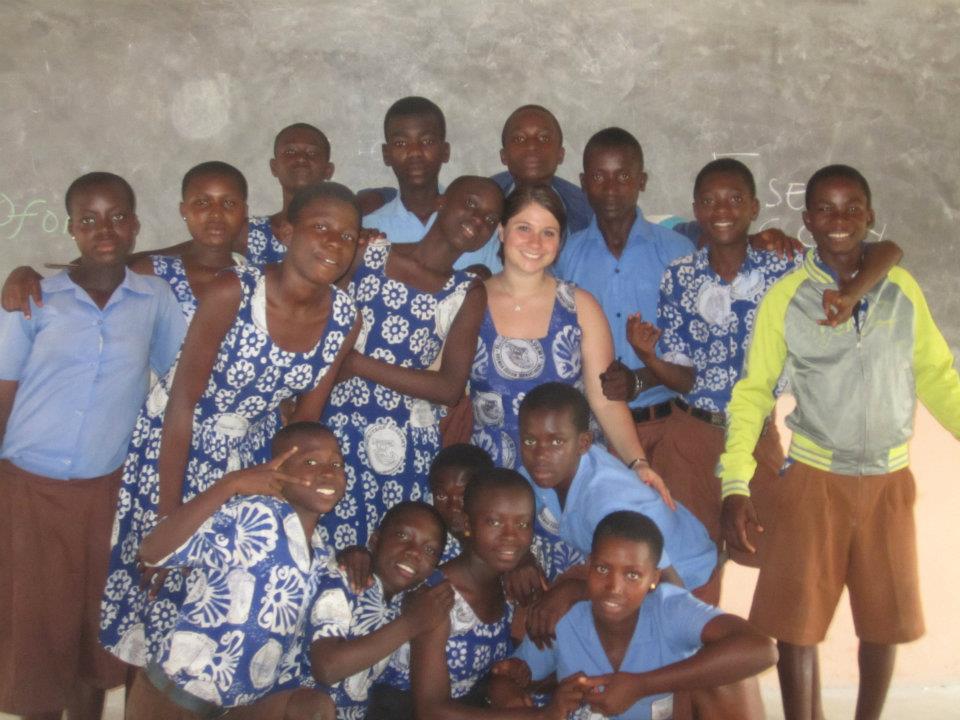
I recently read #InstagrammingAfrica: The Narcissism of Global Volunteerism and it made me look at these pictures on Facebook a little differently. I now saw myself purposefully posed in the center of a group of people, that I wouldn’t see or talk to again. I thought about the language barrier and the structured timeframe to get to know one another - how much change did I bring to this community. As I went back to my trendy classes, college parties, and JCrew outlets, was the trip really “life changing” for me? I couldn’t help thinking after posting these pictures on my Facebook and receiving many “likes” and comments with words of admiration, was I narcissistic? A fraud? Did I simply go on the trip for a picture and for all of the “likes” I would receive after it I made it my default?

Okay, maybe each experience wasn’t as life changing as my pictures pronounced and the poses in the picture were intentional, but these relationships, although fleeting, did form! And even if I didn’t enable permanent change within these communities, I still exposed them to other ways of life and broadened their knowledge. What I most disagree with from the article is the assumption that by posting these pictures on Facebook, I am narcissistic just looking for attention and admiration.

403660_2822978936947_1196818784_n

While my pictures may not represent all aspects of my experience, my posed pictures still captured a moment of reality and they reveal a lot about my character, my interests, and what I can offer to the world. To a friend, I have interesting and have unique stories to add to any dinner conversation. To my family, I am brave, curious, and someone my grandma can brag about to her friends at her weekly bridge game. To a future employer who will no doubt Google search my name before an interview, I am someone who steps out of her comfort zone, who is sensitive to others and willing to learn, who is adaptable and can offer a unique perspective to any brainstorming session.

The pictures we post on Facebook and Instagram are out there for the world to see and we wouldn’t post them if they didn’t reflect who we are or at least who we want to be.

So friends, family, colleagues, future employers – check out my pictures, check out my story, check out who I am and get a preview of the person I’m on my way to becoming.

A Social Media-Filled Summer in Israel

For the past two months Onward Israel participants from Hillels and cities all over the United States have been living and interning in Tel Aviv or Jerusalem. Working in Israel during Operation Protective Edge and hearing sirens throughout the country was an especially impactful experience, and we at BOMAH have had the privilege of working with the selected Social Media Fellows from each group to help them share their personal stories and experiences.

As a result from participating in BOMAH workshops and consultations, the Fellows perfected our storytelling strategy and were able to put the reality into words, which at times was much different that what the media portrayed. By writing more impactful posts they were able to comfort their family, friends, and communities at home with their truths, while reaching and engaging new audiences.

Our work with the Onward Israel participants began at the beginning of May when the Fellows had an initial group conference call with Itzik Yarkoni, BOMAH’s Founder, discussing the logistics of the program and explaining the social media tool kit provided. Each Social Media Fellow also received personal consulting about fulfilling their summer goals and how to share their stories through the social media medium of their choice: blog, Twitter, Instagram, or YouTube etc.

Once in Israel, the Fellows attended BOMAH social media workshops throughout the summer. They learned about our storytelling strategy in depth, how to effectively share posts on their Facebook pages, and practiced their public speaking skills in order to prepare to give presentations about their time in Israel on their college campuses.

As most of the fellows’ programs are coming to an end this week, we are proud of what they have accomplished this summer and look forward to reading their stories in the future.

Interested in seeing more from the Onward Israel Social Media Fellows? See their posts featured from our Facebook page!

DP Circle

“Thanks to social media workshops and individual consultations, I’ve learned how to turn a good blog into a great blog. I’ve learned how to make my stories both innovative and interactive. Thanks to the Jewish Agency and Itzik Yarkoni, I’ve been able to share my Israel Experience with more than a thousand people in a dozen different countries.”

-Daniel, Cleveland Onward Israel
Intern at The Moshe Dayan Center for Middle Eastern and African Studies at Tel Aviv University

Read his blog here.


AR Circle

“With the increasing attacks on Israel I quickly learned the importance of sharing my experiences of living in Israel with my family and friends back home. Attending BOMAH’s social media workshops and having personal consultations with Itzik allowed me to organize my ideas and learn how to effectively and efficiently share my stories.”

-Allison, Hillel Onward Israel
Intern at BOMAH

Read her blog here.


LK Circle


“I think the social media consulting has been very helpful in generating inspiration and ideas. First of all, Itzik shares his knowledge with us, offering us important tools for making our posts more “viral”. Second of all, getting to see all of the other social media fellows’ work is inspiring and motivating.”

-Leah, Pittsburgh Onward Israel
Intern at BlogsRelease

Read her blog here.


SW Circle


“Social media is overwhelming, and I admit I never was able to utilize social media outlets to their fullest potential. The tips from training sessions also helped me create more intriguing blog posts that captured my audience’s attention. Since our final social media training, I have used Itzik’s suggestions for promoting my blog on Facebook and my views have more than doubled!”

-Shoshana, Boston Onward Israel
Intern at Tevel b’Tzedek

Read her blog here.


RY Circle
“Itzik pushed me to think more critically about social media and the ways I craft my own personal story. From him, I learned how to make my blog more visually interesting for my readers and expand my audience. I appreciate all his help, especially since I don’t have much experience blogging. Without his guidance, I wouldn’t have been able to share all of the incredible Israeli dishes that I’ve sampled during my time here and my love of food.”

-Ryan, Hillel Onward Israel
Intern at the Ethiopian National Project

Read his blog here.

LB Circle


“I think the social media consulting was great. It gave great tips and tricks on explaining what we need to do to have a better social media following while still getting our story across. It wasn’t too lengthy which was also nice because my attention tends to stray if a presentation is too long. Thank you!”

-Lisa, Pittsburgh Onward Israel
Intern at Ananey Communications

Read her blog here.


CP Circle

“I learned a lot of social media techniques from Itzik. He taught us how to reach our audience greatly through what time of the day to post and how to post a Facebook status that pulls the reader in, wanting more.”

-Camille, Boston Onward Israel
Intern at Finn Partners

Read her blog here.

 
AL Circle

“I have learned a lot in our sessions this summer. I think it is good to have the workshops where everyone can share what has and has not worked for them and build off of each other. I think the most important think that I have learned from you is to make sure that I am telling my story in my posts. I think that is what made my blog so successful, because people enjoyed reading my story.”

-Abby, Cincinnati Onward Israel
Intern at Batsheva Dance Company

Read her blog here.


Viral Social Media Strategy

What we learned trying to create an international holiday.

JLM4

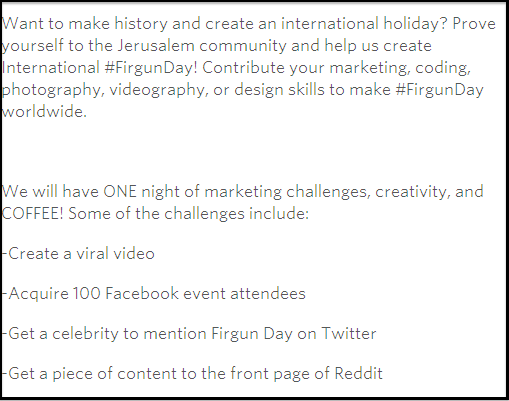
The Made in Jerusalem team learned a whole lot trying to create International Firgun Day. “Firgun” is a Hebrew word of Yiddish origin that defines the selfless feeling of enjoying another person’s success. Made in Jerusalem set out to create this holiday where people write compliments and selfless praise to each other on social media.

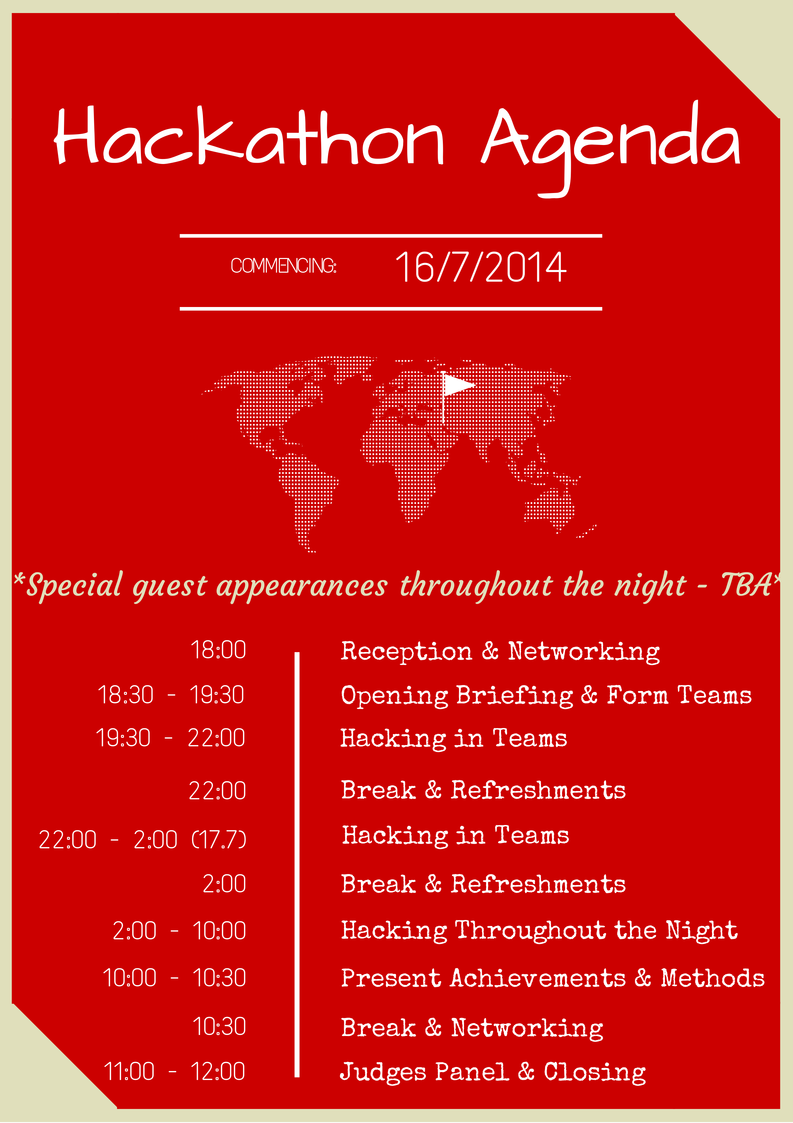
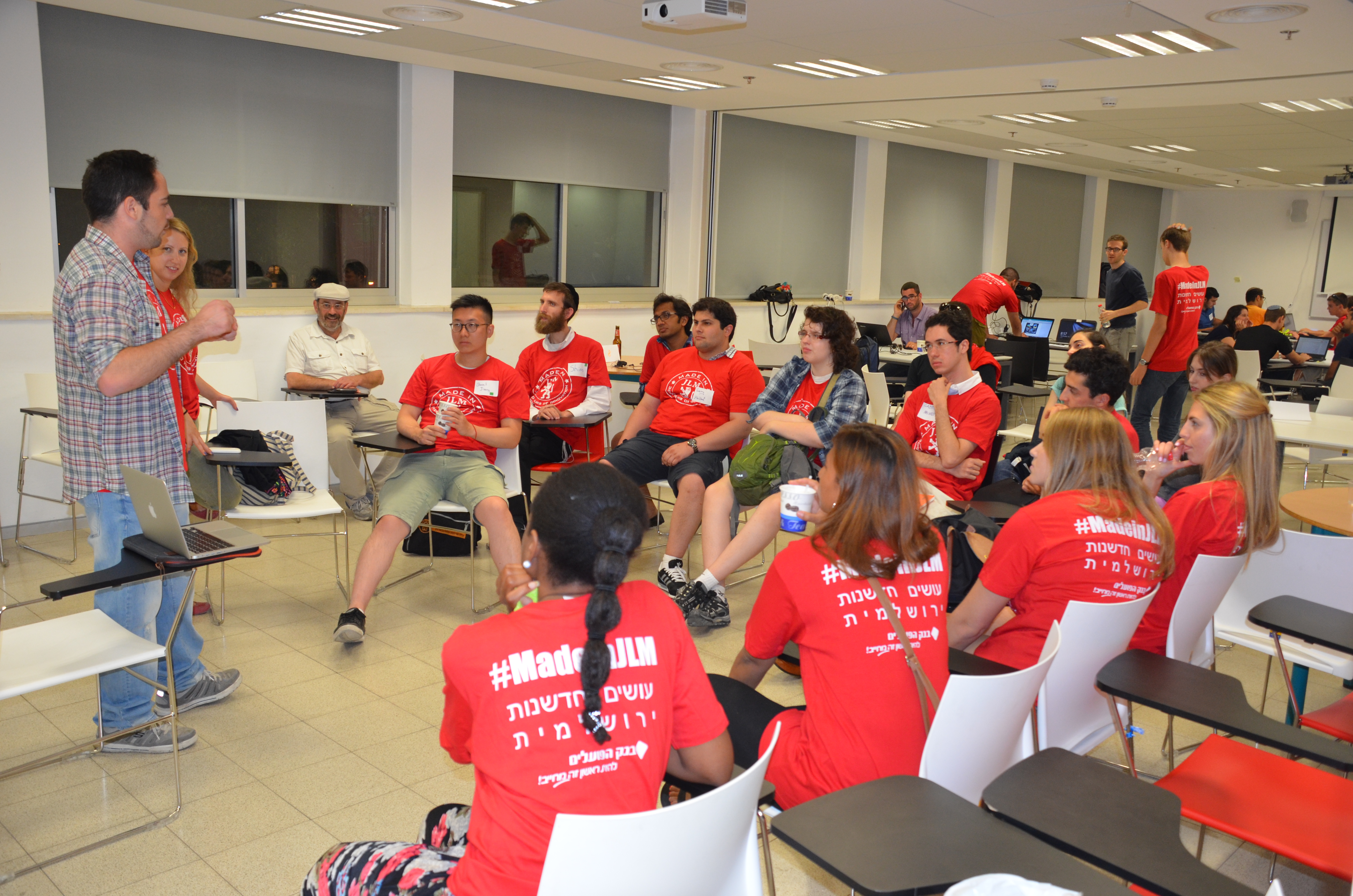
JLM3To create this viral holiday, we had an all-night marketing “hackathon” throughout the night before and into the morning of July 17th. We invited hundreds of people from the community and categorized participants into teams that were formed around a list of marketing challenges that included getting celebrities to mention #FirgunDay or getting content far up on Reddit.

Along the way we experienced both success and some speed bumps. In terms of getting people engaged with a project campaign, here’s what we learned:


What Doesn’t Work:

1. Emailing People You Don’t Know

We emailed hundreds of organizations aligned with the themes of Firgun Day for sponsorship or advertising. Just 5% responded with interest in helping, but half of that group did nothing after that. Instead of finding random organizations, we learned that entering networks where you know members personally gives you more leverage.

2. Asking People to Invite Their Friends

Many people loved our idea and joined the event page, but few invited their friends. People are generally hesitant to invite their friends for fear of spamming, so even people who did want to help did little sharing. The best way to encourage people to engage their friends is to do so indirectly by framing it as “if you like this and want to help spread the word, feel free to share.”

JLM1

What Works:

1. Personal Engagement

The most effective social media strategy is engaging people you know. 90% of those contacted through Facebook joined our event, and they were far more likely to invite their friends. On Twitter, targeting small influencers was the best strategy: people and groups with fewer than 5000 followers more often responded or retweeted us than did celebrities and big corporations.

2. Create an Event

MadeinJLM’s hackathon was a big event for people to network, collaborate, and showcase their skills and talents. People participated because they were dedicated to our cause of global optimism. The night yielded apps, videos, and articles, and more. After the virtual dust cleared, #FirgunDay got many mentions online from people and groups that the MadeinJLM team had never heard of - even an Israeli military radio station mentioned Firgun Day! Having an event with a variety of people expands your networks and increases the number of people you can inform.

3. Something Fun

One of the biggest successes of our campaign was the Firgunator, a website app that generates hilarious compliments for users. The app is intelligently designed to share the content, as creator Uriel Shuraki created buttons for instantly Tweeting, Posting, or snapping a screenshot of the Firgun generation. It was a success because people knew they’d see something new every time they clicked the button, and many users engaged with it repeatedly.

So there you have it. May the force be with you, and we will see you on Firgun Day 2015.

Strategies like the hackathon are to use when looking to promote a bigger event, like Firgun Day. This strategy can be used by anyone, especially when trying to promote a good cause.

Allison Rumsas and Libby Snyder contributed to this post.

A Trust I’ve Never Before Had To Realize

While on my Masa Israel Journey program, I decided to make Aliyah. I landed a great full-time job, registered for Ulpan, and found an apartment in the trendy, and heavily American, German Colony in Jerusalem. Last week, my first week post-program, was amazing and that dreaded “transition to being on your own” was a piece of cake, chocolate Marzipan cake of course. Week two came, and it came with my first Code Red siren; a new disturbance to my new confident On-My-Own mentality. It seemed like with the end to my program and the disappearance of a pre-planned daily schedule and the transparent care of my directors, my safety ended as well. All I wanted was to call my Director at Yahel – Israel Service Learning and ask her to make the missiles stop!

I was at a concert outside of the Old City with some friends last week during the first siren. Everyone knew that the country was facing activity that day and while we were all constantly checking the latest updates on our I-phones, we weren’t going to abandon the concert tickets we purchased out of fear of something that might not even disturb the night’s events. Trying to provide constant comfort to my parents back in the states, I sent this picture with the caption “Safe in Jerusalem - at a concert!”

nfesh

Nefesh Yehudi Concert Old City, Jerusalem minutes before a siren

3 minutes later, sirens went off. The concert was shut down and everyone raced home. The rest of the night was quiet although if a siren went off, I’m not sure I would have heard it over the volume of that heart was beating.

My anxiety about Operation Protective Edge pretty much ended that night. Reading articles and engaging in conversations with Israelis gives me comfort and enables me to be more informed. Restaurants, stores, and public transportation all operate normally, and continue to do so 5 minutes after a siren stops. My Israeli friends are calm and go about their daily lives without fear or worry. No meetings or classes are canceled. I worried before thinking about the situation, because I felt like I should; because that was what I did when I was back in the states and when I didn’t hear about people grocery shopping, laying out in parks, and going to school on the news. Needless to say, I’ve started reading more Israeli news articles than American ones.

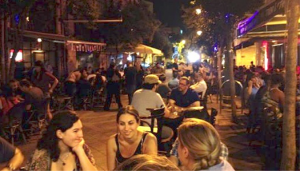
Down town Jerusalem, last week, the evening after a siren

Other sirens have gone off since this first one and luckily I haven’t been by myself during them. The composure of the people around me, the amount of shelter-selfies taken, and the sense of community prominent during these times, all allow me to take these sirens as a 5-minute disturbances to my day.

So, what’s my reality during Operation Protective Edge? My ears and eyes are alert, my phone provides me with updated notifications, I regularly call family members and I give an extra big smile of appreciation to the guard on the train. I grab coffee at Aroma on my way to my office in Musrara, Jerusalem and I meet a client or two throughout the day. Ironically, I work at an Israeli start-up that specializes in social media and much of our energy goes towards explaining our Israel experiences. In the evenings, I have been going to Ulpan and meeting up with friends.

I am well aware that unlike many other areas in Israel, Jerusalem to this point in the operation has seen very few missiles. I also know that these sirens are not simply disturbances and that they are serious threats. However, my “keep on trucking” mentality is the result of a trust, I’ve never before had to realize. I trust my Israeli friends around me, the individuals patrolling the streets, and the IDF, specifically the technology of the Iron Domes. Forgetting Hamas for just a minute, I think about that trust and how THAT, not necessarily experiencing the sirens, has made me just a little bit more Israeli.

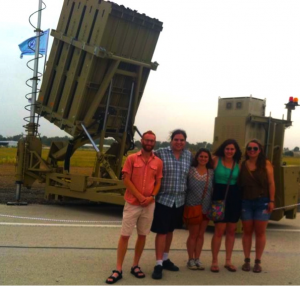
Me with my fellow Masa participants at Tel Nof Air Force Base, Iron Dome behind us

Me with my fellow Masa participants at Tel Nof Air Force Base, Iron Dome behind us

The Red (Alert) Wedding

“The purpose of the Jewish state is to secure the Jewish
future. That is why Israel must always have the ability
to defend itself, against any threat.”
-Benjamin Netanyahu

Everything was perfect. Down to the last flower petal. The beautiful sunshine cast perfect shadows, the tinkling laughter amongst the guests as they moved down the buffet, the soft sounds of classic songs playing in the background, the stuff dreams are made of. The bride was glowing in her gorgeous white gown as she smiled for photos with her friends as the groom dressed neatly in his navy suit was greeting his friends who had come from halfway across the world. The scene was taken from a fairy tale. Everything was truly perfect.

There was an electricity in the air, an intense energy that can’t really be explained. People stayed close to their friends and everyone tightly clutched their phone as if it could save them from some unknown force.
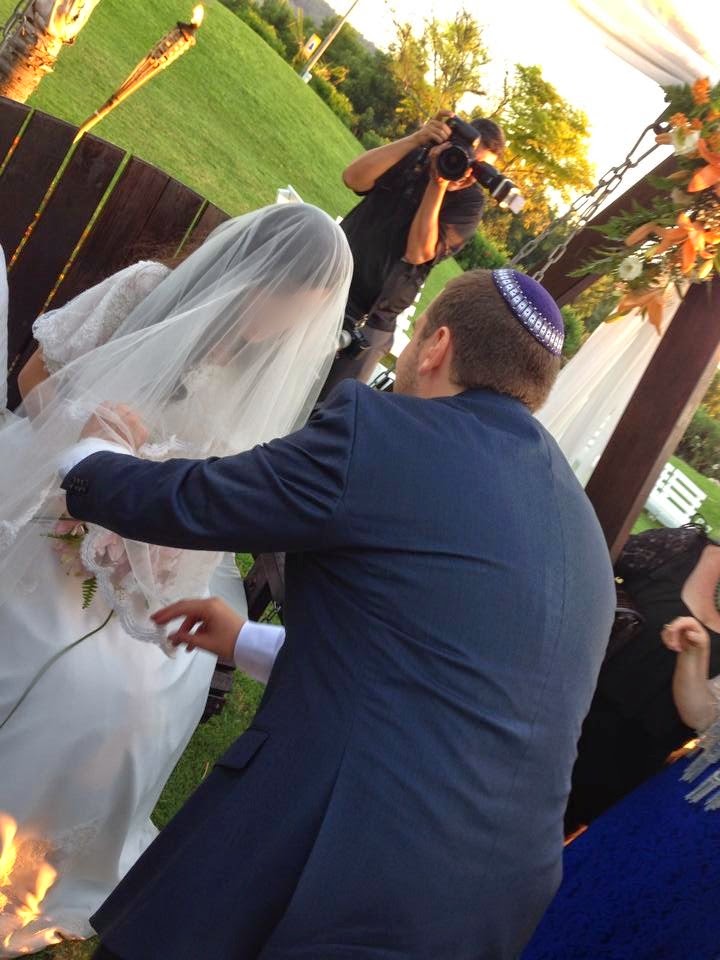
Certainly a memorable wedding!

Certainly a memorable wedding!

The ceremony went off without a hitch. The beautiful couple was married before their friends and family as planned with spurts of music and dancing to separate the various parts of the traditional blessings. Some loud planes passed overhead and the tension rose, but only for a moment. The sun set slowly over the hills as two became one and moved forward to a new phase in life.

The crowd shuffled slowly towards the tent where the reception was to be held. The clinking of silverware on china and lighthearted chatter filled the room as the guests sat down to eat their appetizers that were quickly forgotten as the bride and groom entered and the dancing began. Despite the situation, people were all too willing to let it all go to bring joy to the beautiful new couple. The first round of dancing finished and the crowd filed back to their tables for dinner and of course, to check their phones.

And then it happened. The cause for all the tension, the reason for the slight edge in the air, the reason to stay close to a phone suddenly became reality as a sharp sound pierced the air. It was the sound we had all feared. A moment of hesitation, a quick glance around, the sudden realization that the beautifully decorated tent would protect no one, a slight feeling of panic and then as if moving as one, the guests ducked under the tables. Laughter, not screaming, the ultimate expression of utter surprise even though this reality had seemed so inevitable just a minute ago. There was no way to properly prepare for this moment, to know how one would react or what the natural instinct would be. It was in this moment, in this incredible moment of combined joy and fear, that I experienced my first Code Red siren.

A friend grabbed my arm and pulled me under the table, and on the way down I of course grabbed my phone. As all twelve table members tried to fit under the table the true signs of our generation emerged. “Can you get a picture? My arms aren’t long enough!” “C’mon guys- code red selfie- it doesn’t get more interesting that this!” I of course was not innocent in the slightest as I worked to update my Facebook status while also trying to keep my head from hitting the table top. “Hang on, aren’t we in a tent?” asked my friend with his mouth full after somehow managing to bring his plate down under the table with him. “Um, yeah. Hence the no running for the safe room.” “So why are we under a table? If we get hit we are dead anyways.” A quick hush fell amongst us as we considered this reality and as the siren stopped ringing in our ears, instead of staying down for the required ten minute reprieve to ensure the rocket had already fallen we scramble from under the table and rushed outside. If we were going to die anyway, we may as well watch the scene unfold.

We stood in the grass, huddled together for no reason other than the comfort of someone familiar nearby and searched the skies. “There,” said a guest, and silence fell as we watched the bright orange light in the sky grow larger as it approached. A rocket was flying towards our area and all we could do was watch.

A second light appeared in the sky, then a third and a fourth. Four rockets. Four rockets aimed at the center of the country with the intent to cause as much damage to property and human life as possible. Four rockets were headed towards a beautiful wedding, an event meant to be the most joyous occasion in the lives of the two people we were there to celebrate that night.

“Wait…Look!” Another guest, squinting furiously gestured towards the four new lights that had appeared, moving quickly towards the four rockets. Boom. Boom. Boom. Boom. Four explosions. Four showers of bright orange sparks. And then nothing. It was over just like that. I stood in the grass tightly gripping the hand of a friend, my mouth gaping slightly as I began to process what I had just witnessed. The Iron Dome and the incredible soldiers of the IDF had just shot down the rockets that could very well have taken the wedding celebration to an entirely different place.

A cheer ripped through the crowd and a round of applause for the miracle we had just experienced as our adrenaline levels began to return to normal. As we turned to re-enter the tent people began to call their loved ones to check in and tell them of the incredible scene that had just played out on what should have been a regular wedding on an average Tuesday night in early July.

I stood frozen in my spot unsure of how to feel or react. So this is what it felt like. This is what it meant. This is what the residents living in the south of Israel experienced every time the siren went off as a rocket was fired from Gaza with the intent of causing as much damage as possible. Teetering on the edge of panic I took a deep breath and returned to the tent and of course, to my phone to update my Facebook status with the incredible story I had just experienced.
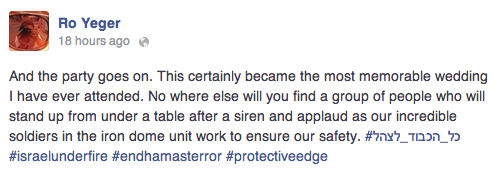
A hasty status typed with shaking hands..

A hasty status typed with shaking hands..

I returned home that evening, just an hour’s drive away and heard from my roommates about their siren experience, running to stand in the stairwell of our apartment building because we do not have a proper safe room. A neighborly gathering, meeting new faces and greeting old friends as everyone tries to stay calm for the sake of the children who are hiding in their mother’s arms.

After exchanging stories and a quick round of phone calls I tried to sleep feeling utterly exhausted and completely drained. I tried to sleep. I really did. But sleep wouldn’t come. I could not get comfortable. I kept tossing and turning, rolling over to check my phone for updates, peeling my ears for the unforgettable, piercing sound that would have me once again running for cover.

This is life as an innocent civilian, a friend, a neighbor, a student, a new immigrant living with the fear of rockets falling on me, my friends and my family. This is life in Israel where the government and the IDF will do whatever it takes to ensure the safety of its citizens first. This is life where we hope and pray that the need for violence will end so our soldiers can come home. This is life where the center of the country finally understands the suffering of the citizens in the south. This is life where we will continue to fight until quiet can be properly restored and we can continue developing this incredible country we live in.

This is life with Hamas in your backyard. This is like under terror.

May we merit to see the end of the violence quickly with the assurance that the quiet will endure. Stay safe and keep praying for our soldiers.

“Victory at all costs, victory in spite of all terror,
victory however long and hard the road may be;
for without victory, there is no survival”
-Winston Churchill

Vision, Determination, and Action

[su_intro]I am a Zionist activist who has been helping Israel’s image for the past six years abroad and in Israel.[/su_intro]

I made aliya from within Israel this past September 2012, one week before Rosh Hashana, since I have been living in the country for the past three years. My vision was to help improve Israel’s image to the world and I set out on a quest to fulfill that wish.

I was born in the United States in New York and raised in France for 10 years. I wanted to make aliya and settle in Israel because I found myself for the first time feeling at home among my fellow Jewish companions. I have always felt the Zionist pull to Israel ever since I did Taglit Birthright and fell in love with the country; also due to the fact that I always loved the Jewish traditions and customs practiced at home in the states and France.

While living in France, I witnessed various anti-Semitic acts such as Arabs spray-painting swastikas and some Arabs throwing rocks at Jews while going to synagogue. My non-Jewish friends would make fun of me for being Jewish in school, which was very uncomfortable. That experience made me realize how different I am and led me to be very curious about what it means to be a Jew.

While I was studying, I became more aware of the constant media bias against Israel as I viewed the atrocities caused by suicide bombings and rocket attacks on the civilian population. I decided to try to help Israel’s image while constantly remaining up-to-date with the conflict. On Facebook, I have been making new groups, including “Peace for Israel,” “Stand against Terrorism” and “Pro-Israel Activists Unite,” totaling 8,000 members, to help people around the world receive the news and truth about the conflict in Israel. At Drew University in New Jersey, I was the Hillel president where I initiated various Pro-Israel events to demonstrate to students the complexities of the Arab/Israeli conflict, such as hosting guest speakers like Israeli political analysts and Israeli consulate spokespeople to discuss the core issues facing Israel. Finally, I changed the university’s study abroad policy to allow students to study in Israel.

Following my personal battle to help Israel, I decided to enter into a Master’s Degree program at Tel Aviv University; however, I needed more experience within Israeli politics. I became involved in several projects all designed either to help Israel’s image in some way or to help new immigrants. One is World Magshimei Herut, an aliya and support organization founded in 1999. Another is Hadar Israel, a grassroots non-profit organization that encourages international dialogue and a third is the Gloria Center for Global Affairs, based at the Herzliya Interdisciplinary Center. I helped to create a joint China/Israel event at the IDC to foster ties between both countries by bringing politicians and business leaders together to discuss topics relevant to both countries. In the meantime, I have helped Philippe Karsenty with his struggle to show the true story behind the Mohammad Al-Dura case in 2000 by providing him with different locations to appear as a guest speaker. With his PowerPoint presentation and speaking abilities, he helped to show the world that the Palestinians used the fabricated death of Al-Dura to launch a media attack against the State of Israel.

In order to get practical working experience while becoming familiar with the Israeli political and diplomatic arenas, I volunteered in the Knesset working in the Likud party. I aided former deputy minister Ayoob Kara with strengthening his ties to Evangelical Christian American groups and politicians in the US. Also, I used my French skills to acquire contacts for him in French-speaking African countries and among European politicians. During the second flotilla crisis in 2011, I aided the Foreign Ministry and the Gloria Center and a new pro-Israel initiative called Like for Israel which set up a communications room in Hertzliya to distribute accurate information in many different international languages about the threat of breaching the blockade and why the Gaza blockade is crucial for the safety and security for the State of Israel. Finally, during Operation Pillar of Defense in November 2012, where Israel launched a military operation in Gaza to stop the terror rocket attacks in the south, I volunteered with the Ministry of Hasbara. I aided them with translating government documents from English to French while distributing the crucial information to Jewish centers in France.

Recently, after making aliya and completing my MA in Conflict Resolution from Tel Aviv University, I was very involved with the general elections of 2013. I helped the Likud party promote their agenda. Meanwhile, I have attended numerous political and Hasbara related events all around Israel including the President’s Conference and Hertzliya Conference from the IDC in order to learn more about the conflict and make new connections. I have helped different initiatives in Israel including raising awareness of the plight of the Jewish refugees from the Arab world and the peace process using my PowerPoint skills, research skills, and speaking skill to educate students and pro Israel Activists about these particular issues.

I found my passion in life, which is to assist the country in its struggle for a positive public image to the world.

I realized that I have a duty, as a Jew who studied the Jewish and Middle Eastern history, witnessed firsthand anti-Semitism, and is a Zionist who cared for the only Jewish state, to give all of my time and effort to help Israel in its ongoing quest to portray itself as a light unto the nations. I look forward to working harder and longer in this never ending quest of helping the Jewish state defend itself from the media onslaught, improving Israel’s image around the world, and strengthening the diaspora Jewish connection to Israel.

It’s Not Marketing, It’s Storytelling.

[su_intro]Imagine that worldwide everybody can share their own story and everybody can see it.[/su_intro]

Well this is todays reality; we now have the ability to spread culture and knowledge through storytelling online.

The possibilities are limitless and the outcome could be great. No longer will the education of future generations be constrained by geographic or cultural boundaries, because sharing your story with the world is as easy as typing some words and clicking a button. The beauty is that it is your story. It is something real, something personal and something that is true to you. Storytelling not only allows you to go back and recall past experiences, your narrative shapes and influences the perspective of your readers.

As part of my 5-month internship here in Israel with BOMAH – The Brand of Milk and Honey, I learned how to harness the power of storytelling. BOMAH uses storytelling as a new strategy to positively re-brand Israel online and fight against Boycott, Divest, and Sanctions (BDS) movements on campuses. The best way to fight against negative content being produced in the online world is by sharing things that are positive and personal. I’m talking, of course, about telling your story.

There is no one way to share your story.

It can be as simple as posting on Facebook or keeping a blog. I decided to tell my story in the form of an interactive program called Tour Builder. Tour Builder uses Google Earth to show people the places you’ve visited and the experiences you had along the way. It allows you to choose locations, add photos, text, and video, and then share your creation. Using this program, I created a representation of my life, my journey in Israel, and the work I’ve done with BOMAH.

Josh’s Story on TourBuilder

More Than I Bargained For

[su_intro]It was the summer of 2005 at eleven years old in the back of my dad’s former kosher catering shop that my parents surprised my sister and I with a trip to Israel.[/su_intro]

I was off the walls, shrieking with excitement. A smile from ear to ear. I was going out of the country for the first time! I would get to see my aunts, uncles, and cousins! I would get to travel around and practice the couple of Hebrew phrases I knew! I was jumping for joy throughout the entire 2-week journey.

My parents, sister, and I walked off the plane and almost immediately started the vacation upon stepping onto Israeli soil. We got to see all the common tourist sites, and went to my cousin’s wedding. We had such a great time, but as soon as all the fun started, it was already time to leave. So sadly, we packed up and flew home. But then we went again for my bar mitzvah. Then again for another cousin’s wedding.

Several years went by. I got busy with high school, overnight camp, youth group, etc. I put Israel on the back-burner. But as those other pieces of my life faded away, I felt a need to see again why I loved Israel so much in my childhood. And this trip would have a higher purpose than just sightseeing and family visits (as much as I appreciate those things).

So I came alone, on my own initiative.

No programs to guide my way along a professionally prepared itinerary, to learn history or take pictures at touristy spots (although this is all important too). No, this time, I got to know the people. I spoke with 18 and 19 year olds who chose to drop their lives in their home countries to return to the homeland, to serve alongside native 18 and 19 year olds. I spoke to Jews, Muslims, Christians, humans about their lives, of the joys and complications that they experience. I sat on the beach and soaked up the sun—but not too much, I’m a gingy as they say. I hiked the rocky terrain of the green mountains and tan deserts. I tasted every crumb of food within my reach. I spoke in the language that my ancestors have spoken in for thousands of years. I listened to the music and joined in song. Then and there, I was home.

I had come into Israel looking for a good time. Good people. Good food. Good weather. Good pictures. Good memories. But I got more than I bargained for. I found home. And my story continues…

PS: My sincerest thanks to my family, friends, Volunteers for Israel, CJP, Hasbara Fellowships, Onward Israel, BOMAH, and all who I’ve met along the way. תודה לכם

In Search of the Tribal Fire

[su_intro]This past week I participated in a five day camping / hiking dialogue seminar in the Northern Negev.[/su_intro]

Hillel created the program, Tribal Fire, in an attempt to encourage Jews in the Diaspora and Jews in Israel to exchange perceptions about their Jewish identities. It was a an invigorating and emotional journey, spending five days in nature together sitting around the campfire and discussing our beliefs and very personal experiences. I never thought that I could create such a close bond with the Israelis I met in this short amount of time. The connection between us was immediately apparent , which allowed for some serious discussions and exchanges of opinions, thoughts and beliefs.

Over the course of our five-day experience we hiked during the day, camped in the freezing cold desert under the stars (huddling 7 people together in a small tent), spent a beautiful Shabbat in nature, slept in the sun, played guitar and introduced Israelis to American s’mores around a bonfire (which they loved). Personally, (because of a bad ankle the last day) I had the amazing opportunity to explore Be’er Sheva and Netivot with a local and learned through her experiences what life is like in Southern Israel. The final destination for the group was in Sderot, a small city on the border of Gaza that has been the victim of many rocket attacks.

As for Judaism… I had never thought much about my Jewish Identity before coming to Israel. After spending four months living here however, I have developed a greater sense of what Judaism means to me. We won’t get into all that right now, but the point is that it never even crossed my mind that Israeli Jews have a completely different way of relating to their Jewish identity then I do.

For me it was tough to express my Jewish identity growing up.

In America, it is not so “cool” to be Jewish. People would say to me things like “wow I didn’t know you were Jewish…” I would reply with “well I’m not really that Jewish…” or something along those lines. In hindsight, I am a little embarrassed about that fact that I felt the need to keep my identity hidden, not only from my peers, but also from myself. The reality for me though is that it is not quite so easy to be Jewish because in the Diaspora, as we always represent the minority.

The Israeli’s that I have become close with during our trip had a different connection with their Jewish identities. In Israel, it is easy to be Jewish because the environment in Israel is predominately Jewish. There is less worry about things like intermarriage and anti-Semitism. However, I observed that there is a struggle of identity between being Jewish and being Israeli. The two coincide with one another to become one single identity. Israeli’s don’t understand the struggle of Jews in the Diaspora because they have never been subjected to an environment where you have to go out of your way to be Jewish.

For Jews in the Diaspora, it is important to go to Israel to really experience the historical homeland of the Jewish people. Visiting Israel allowed me to become more in touch with my own Jewish identity. However, it is almost equally as important for Israeli’s to spend some time in Jewish communities in the Diaspora so that they can experience the separation and the struggle to practice Judaism in a society that is not constructed around it. This experience can lead to the understanding of the difference between Jewish identity and Israeli identity.

Jewish identity is different for every person. Whether you identify with the cultural, moral or spiritual aspects of Judaism, I believe that your Jewish identity is about finding whatever works for you. But in order to continuously grow as a person, you need to ask the right questions and search for the right answers. The most important thing is to have dialogue with others who don’t think like you. There is no way to expand your own identity without listening to and trying to understand the perspectives of others.