Breezometer: “Making the Invisible-Visible”

We research and bargain for days on the best deal for that Chanel purse or the brand new MAC notebook. Question is, why don’t we make sure our lungs get the same treatment? Why don’t we look into the best QUALITY of air our lungs intake?

Unfortunately, we tend to overlook the things that we physically can’t see even if it’s as fundamental as the air we breathe. Our respiratory system works 24/7 to make sure that all parts of our body get oxygen otherwise we literally won’t make it. Simply put, we as humans need air to survive.

A few Israeli environmental engineers decided that these questions needed to be answered and quickly because our future livelihood truly depended on them.

Several years ago, environmental engineer Ran Korber was house searching with his family and before making any final decision he wanted to check the eco-friendliness of the neighborhood. As he researched the air quality of a particular part of town he noticed that the information he was looking for was entirely scattered and that it was nearly impossible to get a quick idea of what exactly he and his children would be breathing in. He needed this information to be a lot more accessible and simplified and knew others need it too. He called his buddy, Ziv Lautman, fellow passionate environmental engineer and they started to develop one of the most promising apps of 2015 – Breezometer.

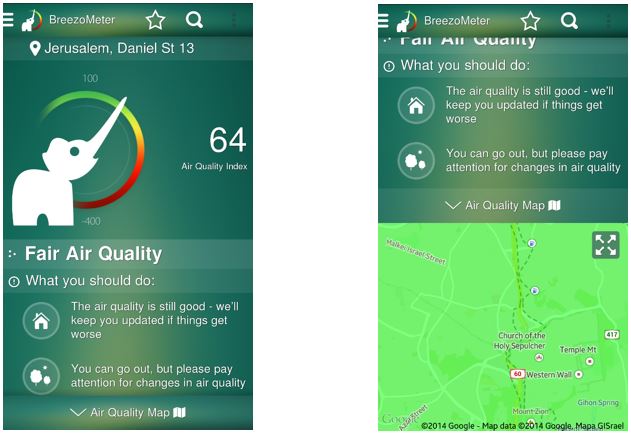
Breezometer (illustrated below) is a mobile application that tracks real-time air pollution on a street level basis. What used to be invisible is now available to us in plain sight. What now Co-Founder and CMO, Ziv, describes as “the Waze of air pollution” – Breezometer tells you exactly the type of air quality (Air Quality Index rating) you’re surrounded by this minute and where you can go to surround yourself with better air quality. Additionally, the app tells you what to do (i.e.: whether to keep windows open or go for a run…) for each specific rating.

Athletes, children, health sensitive women (i.e.: pregnancy…) and everyone in between can benefit greatly from getting lighting speed reports about their current environment. Furthermore, while the eco-green population is growing all over the world, Real Estate brokers are now benefiting from this app due to its street based availability.

breezometersap

So how exactly does Breezometer track the air so accurately? Data collecting at its finest, the innovative team created an algorithm that collects data from thousands of government funded air monitor sensors that are located between streets.

Okay so it’s great that environmental engineers are zealous about air but why should we still track our air to the point of getting an actual app for it? Well according to the World Health Organization in 2012 around 7 million people died - one in eight of total global deaths – as a result of air pollution exposure (Source: World Health Organization [http://bit.ly/1jpGo4S])

The team CEO Ran Krober and co-founders Ziv Lautman, Emil Fisher and Revital Handler received the honor of representing Israel in the Global Entrepreneur Week GEW50 competition and they are currently prepping for their trip to the annual Web Summit in Ireland where they will pitch Breezometer on November 4th 2014 and have their official U.S. launch!

In addition to currently being available on Google Play for Android and soon becoming available in the App Store, Breezometer is also accessible to all the smartwatch users out there (perfect for your daily jog).

Stay up to date with Breezometer’s exciting team and follow them on Facebook here!

The Breezometer Team

The Breezometer Team

*This blog was brought to you by BOMAH’s “Empowerment” Strategy. Go ahead and click on that link and see the magical place it brings you too.

BOOSTER: With a Little Help From My Friends

It’s 12am on a Tuesday night and you have a History final in 8 hours. You’re alone and on your 135th cat video on YouTube. Procrastination is once again the theme of the night.

Enter “Booster”. Inspired by “that one friend who’s never on time, anywhere”, the Tel-Aviv based Booster App allows your friends to be your personal alarm clock/task manager. Except, instead of pressing the snooze button you’re going to actually have to take a selfie of yourself doing the task and immediately send it back to your friend for verification in order to complete the task.

The founders of Booster, Eyal and David, came up with this procrastination crushing idea when a close friend of theirs had constant issues with getting to work on time. While both studying psychology they discovered the “Social Regulation Theory”. This theory states that people are much more prone to assertively getting things done faster when they are socially influenced.

With no experience in technology or app development they came across Tom and Gary whom were able to use their application development skills to bring Booster from a mere idea into reality. The four co-founders plus one employee will launch the app November 3rd, 2014 in Tel Aviv. It will be available both O/S and Android.

Their next project, “The Trainer App”, will be their first business-to-business venture that will get people physically moving at the gym by connecting personal trainers to their clients whilst using the Booster structure. They plan to launch the project sometime next year.

Much like the BOMAH Yalla! strategy, Booster empowers you get up from your seat and get things done!

Follow BOOSTER on Facebook to get live updates on their releases and new features here.

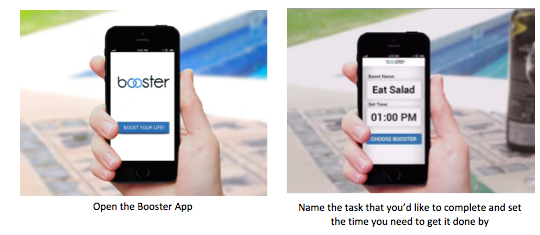
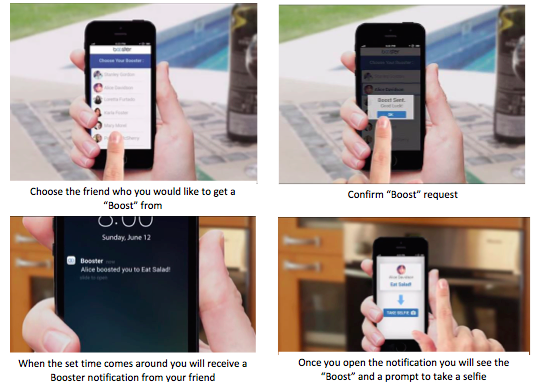
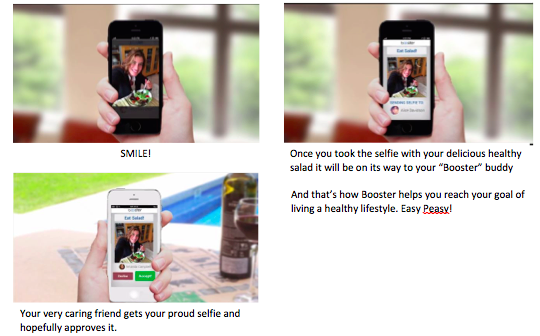
Below is a step to step illustration of Booster at work for someone who is trying to stay on track with their diet.


Don’t Get Blogged Down

Want to write a blog and actually reach people outside of your network?

Medium.com is a new and fresh blogging platform, designed by Twitter creators Evan Williams and Biz Stone. It’s widely considered easy to use, futuristic, communal, supportive, and possessing high quality material for readers and writers.

What makes Medium stand out

  • Spammers haven’t been able to jumble the site with blank posts and dummy advertisements.Your content in their editor looks exactly the same as when it gets published
  • The M icon on the left opens the editing tools
  • Write on a blank white page that helps your thoughts spill freely without distractions.

Have only a few minutes to read an article (VERY COOL)

Well, each article provides an estimated amount of time it will take to read. Now you know if it’ll take 2 minutes to read somethings or 20 minutes. Time management - check!

Blogs on Medium are:

  • personal views and suggestions on current events and general interests
  • chosen for the site based on quality
  • publicly shared on a wide scale with hundreds of thousands of readers who are a part of the Medium community

How to Use Medium:
Register with your Twitter account. You can even use your Twitter account to comment on headline articles right now! The Medium staff editors regularly invite users to write on the platform which keeps posts active and frequent.

Commenting is SO EASY:

You can comment on any paragraph however it’s ultimately up to the writer to allow those comments to be viewed (haters may hate… but at least they don’t have a place on Medium).

Drawbacks: If you write an article, that article belongs to Medium, which means you can’t incorporate your own logo or post it on your own social media forums.

It’s competitive to get your blog to get featured…the merit system is tough sometimes.

BOMAH wants to empower you to share YOUR story and Medium.com is a fantastic way to make that story viral. Join today or just experiment on Medium.

I Didn’t Think I Could Change The War. I Was Wrong.

R1

It is hard to ignore the news and it is even harder to engage with it

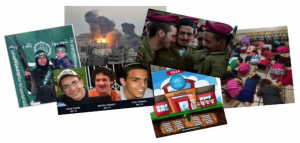
Over the last 2 weeks, these pictures and others like them have been all over the news, publications, and social media. With different news channels sharing opposing stories, newspapers vouching contradicting “facts”, and Facebook flooding with comments, what do YOU think about them? Do they invoke fear? Do they make you more confused? Maybe they even make you excited and more interested about what is going on in this part of the world?

Regardless of how these images make you feel, it is hard to ignore the current news and it is even harder to engage with it when as citizens, we don’t exactly have control over the situation.

What we CAN do is write.

Posting a Facebook status or writing a blog is one of most powerful ways to engage with these current events, or any other issues that you encounter. Writing enables you to articulate your own thoughts and sharing these thoughts allows those that care about you to begin to relate to your experience. Sharing these thoughts through social media is the quickest and more efficient way to reach masses.

Benefiting You

Writing is incredibly therapeutic. It allows you to pour out your thoughts and emotions, no matter how scattered or intense they are, without facing any opposition. By writing your unreserved feelings down, you will relieve yourself of the emotions that hold you back from accomplishing what you want to accomplish. Fill your writing with “I” statements and own your thoughts!

Benefiting Others

Blogs and personal stories are more powerful than a journalist’s report or a news article because of the personality that comes through in it’s content. The words in them are honest and emotional and it is that genuine voice, not a scripted dialogue that gets a reader to pay attention and to believe what you are writing. This is why personal storytelling is so important. Through blogs, statuses, and pictures, we can inform our communities about your life, about what is happening on the ground in Israel and about what is going on in your head. Writing provides information and comfort as well as lets people into our lives on a more intimate level.

Ways to most effectively share your story with your audience:

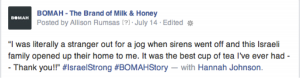
1) Be real –The news shows the missiles, the destruction, and the fear in people’s eyes over and over again. We write to let people see OUR sides of the story, not what is just on the news. Your story may include being in a bomb shelter but the thoughts, emotions, and discussions that occur during these experiences add a new layer to the story that a news report doesn’t provide. For example, sharing a story about a new person you met in a stairwell or talking about the pride you feel for your community can open your audience’s mind to a different side of the situation. Personal growth or positive experiences will captivate your audience and keep them reading as well as comfort them that you are not only safe but that you are also growing from the experience. Campaigns, such as #BOMAHStory, illustrate this storytelling strategy on social media and share people’s truth to the world.

R2

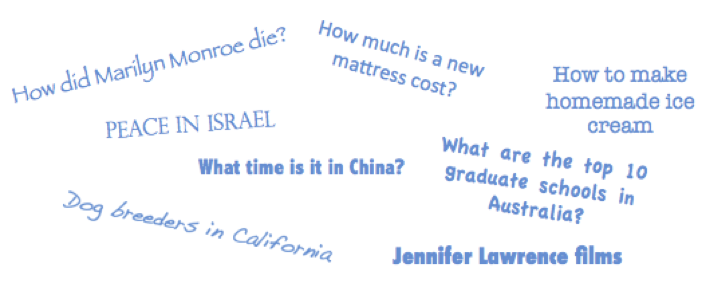
2) Identify your audience and use terms that are trending –If your friends and family aren’t as engaged with the issue, chances are a lot of the terms and information you use will be hard to connect with. So, what do we do when we don’t know something? Search the internet! Use common words and phrases that are trending on Facebook and Twitter so that your community can easily look the correct information they seek. Terms like “Operation Protective Edge” and hashtags like #IsraelUnderFire, #IsraelStrong and #BomahStories are popular to search and will provide an abundance of relevant information. Take it a step further and add hyperlinks, suggested news sources, or links to another friend’s blog to connect your network with more even more sources!

R3

3) Visuals – Adding pictures or videos to your writing allows the audience to see through your eyes. These images can also replace or add to the images seen on television. If you are not in Israel, adding a visual can help your reader bring your words to life and your opinion all of a sudden becomes a scene your audience can imagine! If you are in Israel, your images can be your readers’ ticket to your reality.

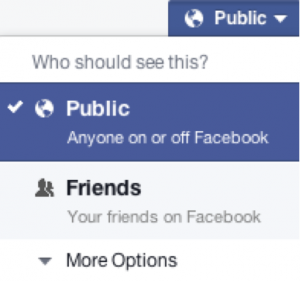
4) Make your Post Public – Whether you have a personal ongoing blog or are posting an isolated Facebook status, your thoughts have the power to strengthen community, educate those who are less informed, and even start a discussion with those who stand on a different side of the argument. However, to reach all of these people, this includes people outside of your list of Facebook friends, post your thoughts on as many social media forums as possible and make sure your settings are public so you can be heard!

R4

5) Be social –Having people engage with your thoughts is the goal of using social media and leads to you having loyal readers. Your readers will undoubtedly respond with a “Stay safe!” or “Thank you for the update!” Make sure you reply with a “Thank you for reading! I’ll be posting more so keep checking my page” One way to proactively engage people is go give a shout out in your post such as “So family and friends, I’m hanging in there!” or tag someone directly.

Yalla – Help yourself and help others! Write a blog, post a status, share your thoughts! Message your stories with a picture on the BOMAH fan page to share it with the world!

Curiyo: Your Online Curiousity Organizer

Google defines our generation. It has completely transformed how we share information, gather knowledge, write papers, and how connected we are with the world.

1

It can all be found on Google! It’s AMAZING!! Until you get over 20 pages to open. From there, it’s a game of hit or miss to see if a site has exactly what you are looking for.

2

That’s where Curiyo come’s in. Curiyo is the latest browser app that combines all web searches, identifies what is important, and creates an answer profile to provide you with exactly what you need all in 1-page. This includes information, posts, comments, hashtags, mentionings, and history from your favorite sites such as Facebook, Twitter, Encyclopedia, News sources, gossip columns, GoogleMaps, Stores/Shopping sites, Imdb, etc.

  • Just one-click needed
  • No navigating through pages
  • Organization – cut the clutter!
  • Videos, pictures, and maps included, if relevant

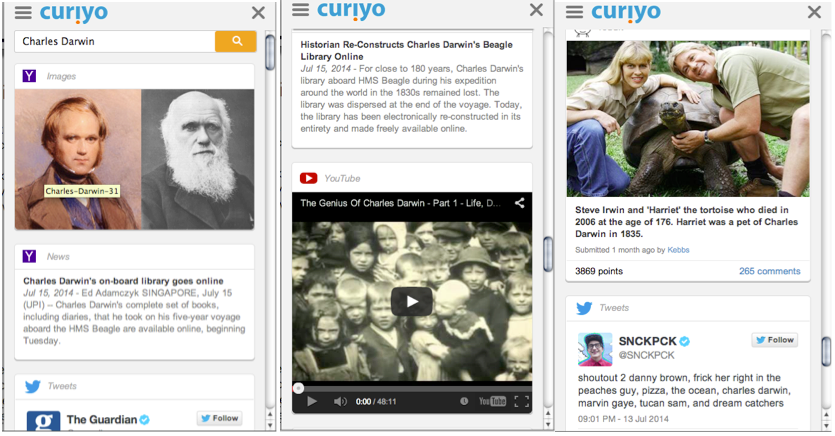
Who is Charles Darwin? Curiyo shows:

Screen Shot 2014-07-16 at 4.16.46 PM

And the information, all on one scroll tab keeps going!

Curiyo’s structure of providing information in a fluid format, allows one to learn about the world as if they were reading a story (like BOMAH’s storytelling strategy!) with an organized sequence and chapters clumping similar sub-categories together. The pictures, videos, maps, and personal quotes help bring your topic of inquiry to life, even if you are asking about someone who’s life has long past or about something that isn’t alive at all!

Go to Curiyo.com and try out searches like “cubism”, “Theory of Relativity” and “olinguito” (What’s that last one? Search it on Curiyo!)

Operation Protective Edge: Addressing the Current Event Through Social Media

With Operation Protective Edge activities on the rise, we are all trying to find the best ways to communicate with our audiences, to provide comfort to these people that believe in you and your brand, and to show them that your organization is on top of the issues at hand.

Why Social Media – Communicating through social media is the fastest and most efficient way to reach your participants and followers en masse. What’s even better is that you have control of the words being posted and you can create a positive and comforting message. This can also ensure a positive association with your company and external happenings going forward. Using social media avenues such as Facebook, Twitter, and LinkedIn also empower others to use their own voice and respond. These forums also enable you to time your posts so that your audience in the USA and other countries can see your letter at their most appropriate time. So use as many social media avenue as you can and start talking with your networks!

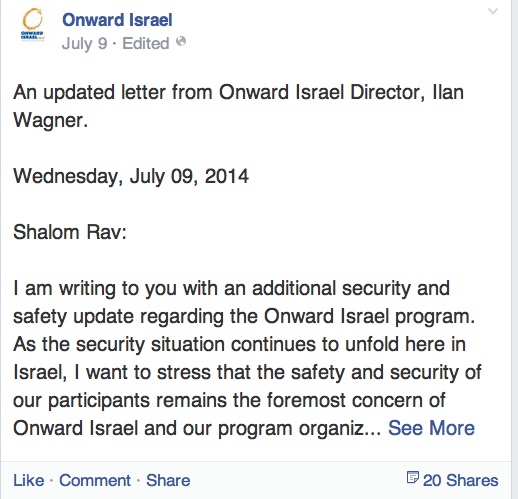
1. The Opener – The first sentence or subject to your post needs to immediately provide your audience with what they are looking for: TRUST IN YOU! Immediately soothing the anxious minds of parents, donors, or future participants can enable your reader to confidently trust in the words that follow in your letter. Below is Onward Israel’s opener in their address letter:

onward

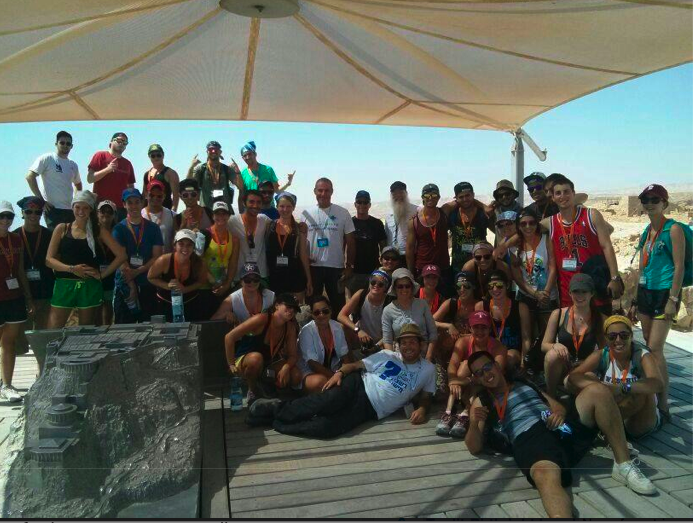
2. Acknowledge the Issue – With dozens of articles and news stations to tune into, your audience is reading your post to learn about what’s going on without all of the fluff and mixed messages. They want, and deserve, to hear the truth about the situation from you, a source they are involved with. 3. YOUR Reality The beauty of social media is that we can post in “real time,” however this means that people expect to learn about what’s happening at that moment. Illustrate how the situation is currently affecting your organization or program; maybe a trip went on an alternative itinerary or maybe some people were relocated. Using a picture or video can illustrate this positive status and enhance the your audience’s confidence in your company. Taglit-Birthright does this well! “These days are challenging…but I just came back from visiting groups who are hiking Masada” – CEO, Gidi Mark.


Picture 2

4. Share Your Plan – When a crisis it out of your control, comfort comes from knowing you have a plan in place. Sharing the people and places that you are connected with in case of a crisis illustrates that you were thoughtful and proactive before the incident even arose! This also adds to the legitimacy of your organization and allows your audience to be a part of each step of the process.

5. Be Helpful – Having someone’s contact information can be a huge source of comfort, even if that phone number or e-mail address is never used. Putting your own contact information, or a crisis-specific address, is a way to make the outreach more personal and makes your audience feel like they will receive individual and focused attention. Other ways to be helpful include listing news sources or hotlines they can turn to for more information – hyperlink these websites, including your own, for easy use. Creating your own hash tag, such as #bomahupdates can also be a great way for people to follow updates through you and your brand. MASA – Israel Journey:

masa

6. The Power of “We” - Using “we” statements creates a sense of community and personal attention to all people affected in the situation that are reading your letter. That sense of community also encourages people to respond to your post and to be active in your efforts to further reassure your audience.

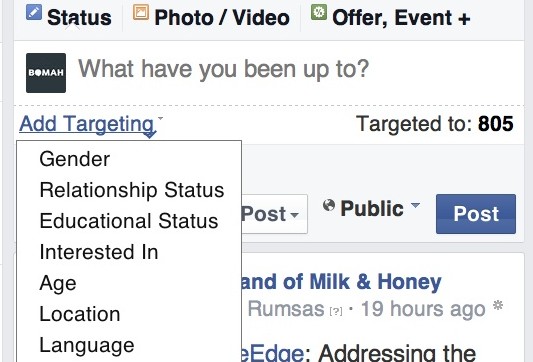
7. Specify Your Audience – Your network ranges in level of participation, age, location, etc. and you may want to communicate with each group a little differently. Through your Facebook Fan page, you can target your audience and post letter’s specifically written for them!

target

8. Be Social! – By posting on social media venues, you are enabling and encouraging others to engage with your posts, so you must engage back! Respond to each question, “like”, and “Thank you” quickly. Special shout outs to parents, like the one below from Birthright, are a way to show your appreciation!

response

9. Back to Normal – It’s easy to get caught up in posting updates about military efforts or what the UN is saying, but it’s always important to focus on implementing your vision. Once things simmer down, write another letter saying that your program is back on track!

* This is a strategy for social media outlets – engaging with media sources takes on a different strategy entirely.Sometimes, when it comes to media, it is best to not talk at all!

Read more and learn about our social media strategy!

When Words Can’t Describe It


Adding a visual aspect, such as picture or graphic, always connects more with your audience. When a picture or graphic is attached with your story, your audience can see what you are doing, where you were at, and even imagine having a similar experience or story as yours. Before your audience even reads your story they see the picture or graphic, which immediately draws them in and makes them want to know more.

The power of the VIDEO!!

“You see the most magnificent sunset, witness an impactful speech, or capture your friends hilarious joke…but which words can appropriately reflect how amazing this experience was? Enter…the video!”

Videos also show events, places, people, and experiences as they are in the moment, not as a moment in time. Most importantly, videos are a way to be interactive with your audience and allow you to take storytelling to a whole new level.

Apps to create YOUR video

  • DIRECTR. This app gives you the ability to act like a director and use storyboards to organize your pictures and movies. You can even use your own clips and template from someone else’s movie, allowing you to “direct” theirs! This app is unique because it reminds you to hold your phone horizontally and pick a focus point, which makes the video more appealing when sharing it.
  • MAGISTO. Magisto takes unedited videos and pictures from your phone and turns them into edited videos with a title, soundtrack, theme, effects, filter, and music. It pieces together the best parts of your videos and pictures to create both a visually appealing and professional looking video that can be shared immediately.

Yalla! Let’s create a video using Magisto

  1. Download the Magisto app and either select pictures and videos already stored on your phone or shoot a video. If selecting footage already on your phone, make sure to have at least 45 seconds of footage for best results.
  2. Pick your editing style, soundtrack, and title. Carefully choose the editing style that correlates the best with your pictures and videos because this will also determine the soundtrack options. Create a title in 5 words or less that can both attract an audience and describe your video.
  3. Finally, click “make your movie.” This may take a couple minutes, but if you enabled notifications you can leave the app and be notified once it’s finished.

Check out Neili Eggert’s first go at Magisto:

“I came to Israel not understanding how to share my love for Israel with the world around me. Attending BOMAH’s video workshop taught me how to use the application Magisto to share my journey in Israel with my campus, UNC-Charlotte.”- Neili Eggert


How to Spread Israel Advocacy to Various Audiences

[su_intro]One of the first steps of Israel advocacy is knowing how to appeal to your audience.[/su_intro]

Of course, many tools can be useful in pitching Israel to just about anyone: use of social media, sharing personal stories, etc. Careful consideration of the audience can enhance those general tactics and make them all the more effective. One should bring up very different points when speaking, for example, to a person who cares most about peace than to a person who cares most about upholding Christian religious tradition. Below are some examples of the types of people who should naturally support Israel, because support for the Jewish state fits in well with their other values/interests, and how they can be convinced.

Here are a few ideas for convincing…

A peace activist: Israel is a critical force for peace in the Middle East, and has been since before its conception. Chaim Weizmann, before he became the first president of Israel, sought out Emir Faisal (a leader of the Arab nationalist movement) as a representative of the Palestinian Arabs and signed an agreement in 1919 that ensured Arab recognition of a Jewish homeland in Israel in exchange for Jewish/Israeli recognition of an Arab state. In 1947, Israel accepted the UN Partition Plan while the relevant Arab leaders rejected it. In 1967, immediately after the Six-Day War, Israel offered to return all captured land for peace with its neighbors, an offer to which Arab leaders responded with the “Three No’s of Khartoum,” rejecting any efforts toward peace. In the year 2000, at Camp David, Israel again showed its willingness to sacrifice for peace, but Palestine Liberation Organization Chairman Yasser Arafat rejected every offer, facilitating a violent intifada instead of cooperating. Israel has struggled time and again to make peace with often unwilling neighbors, and for all of its successes and all of its failures, it is certainly a country intent on achieving peace.

A militarist: Some of Israel’s most important services to the United States are related to the military. Israeli surveillance helps the American military keep track of affairs in the Middle East. Many American soldiers and officers are trained in Israel or by Israeli officials. Many technologies that the American army uses routinely were invented in Israel, such as Bradley reactive tank armor, which explodes outward to prevent improvised explosive devices from harming American soldiers, or Emergency Bandages, which prevent soldiers from dying of blood loss from their wounds. The United States military benefits tremendously from the US-Israel alliance.

An American patriot: Since the Cold War, which Israel became involved in during the Six Day War when it defeated several Soviet-supported Arab armies without receiving aid from the American government, the Jewish state has been a key ally in the region. It has supported American interests, for example, through moves such as the 2007 bombing of a Syrian nuclear reactor that eliminated a very serious threat. Around 75% of American aid to Israel is spent in the United States, providing Americans with jobs and making support for Israel an extremely worthwhile investment. Israel also provides the United States with intelligence, training (of soldiers, military officers, policemen, emergency response teams, Transportation Security Administration officials, etc.), and a plethora of critical technologies. Supporting Israel is patriotic toward the United States, because Israel is such a crucial American ally.

A science junky: Israel is one of the most innovative countries in the world, contributing immensely to various fields of science and technology. The cell phone was invented in Israel, along with many medical advances, including the PillCam and treatments for multiple sclerosis that are used by some 70% of patients worldwide. The OrCam is an Israeli invention that allows blind and visually impaired individuals to “see” through a camera that is so intelligent that it can recognize familiar faces and important symbols such as signal lights on a crosswalk. For someone who is interested in science, Israel is a fascinating and admirable country.

A humanitarian: In many instances in the past, Israel has been the first country on the ground to help alleviate the damage caused by natural disasters and political chaos. Israel has lent support to flood victims in Sri Lanka to earthquake victims in Haiti, to Bosnian civil war refugees and victims of the Rwandan genocide. Israeli medics have saved the lives of wounded Syrian civilians who have escaped the ongoing civil war, including pregnant woman who was recently brought into Israel and helped to deliver her child on Israeli soil. Furthermore, Israeli experts work closely with farmers in Gaza, the West Bank, Egypt, India, and many other countries (especially in Africa) to teach techniques in irrigation and other skills that boost agricultural productivity and success.

A feminist: Unlike many of its neighbors, Israel maintains a progressive attitude toward the treatment of women. While the United States has yet to elect a female president, Golda Meir is one of Israel’s best-remembered Prime Ministers, after working to engage Israel in the support of various African countries and protecting Israel from annihilation during the Yom Kippur War in 1973. A law in Israel prevents underweight models from being featured in advertisements, a measure that the United States has yet to take to fight the media’s attacks on women’s body images. In fact, while women in other Middle Eastern countries are often deprived of educations, forced into marriages with abusive husbands, and barred from participating in the work force, Israel treats women as equals so that the percentages of women who are literate and employed are roughly equal to those in the United States.

An LGBTQ rights activist: Israel is known as the most welcoming country to LGBTQ people in the Middle East. Tel Aviv has been labeled the “gay capital of the Middle East” and, in an online poll conducted by GayCities.com and American Airlines, was named the best LGBTQ travel destination in the world. Huge gay pride parades march all over the state, celebrating Israel as the only country in Asia that recognizes gay marriage and that grants marriage rights to same-sex couples for “unregistered cohabitation.” In fact, Palestinian members of the LGBTQ community often immigrate to Israel to escape oppression by the Palestinian Authority. LGBTQ citizens serve openly in the Knesset and in the military (the latter was true far before the repeal of Don’t Ask, Don’t Tell in the United States), and LGBTQ issues are discussed openly on TV and in Israeli pop culture. Israel is unique in the region for its welcoming policies and culture toward the LGBTQ community.

A secular Jew: Israel’s identity as a Jewish state is not only rooted in Jewish religious traditions, but also in Jewish culture, history, and peoplehood. Sharing stories of Israeli culture and the interconnectedness of the Jewish people can be very compelling to a Jewish audience in particular. Furthermore, Israel has made it a priority to protect the Jews of the Diaspora. Operation Moses in the 1980’s, for example, liberated Ethiopian Jews from anti-Semitic oppression. Israel is more than a center for religious Judaism: it is a center for the Jewish people.

A religious Jew: Israel is an important religious center that helps keeps Jewish traditions alive. It is home to many great yeshivas, and provides an environment that is conducive for religious observance, with kosher food easily available, a multitude of famed synagogues, etc. From Yavneh to Tzfat, the land of Israel has long been the foundation of religious Judaism, and the state of Israel ensures that it continues to function as such.

A religious Christian: Israel is careful to maintain holy sites of all religions, including, in many cases, Christianity. Because so much of Jesus’ story happened within the land that is now Israel, there are many Christian artifacts and sites that are under Israeli sovereignty, and Israel preserves them with great care. Jordanian forces, on the other hand, were known to destroy holy sites when they controlled the West Bank and East Jerusalem. Only under the Israeli government have Christians from all over the world been welcomed to visit and worship at those holy sites, and only the Israeli government is committed to preserve them. Moreover, it is the Christian belief that the land of Israel was given to the Jewish people by G-d, and therefore a religious Christian will generally recognize a Jewish right to that land, and often to land even beyond Israel’s borders.

Anyone: Make use of Facebook, Twitter, and other social media outlets to tell your friends about what living in Israel is like. Post about your own trips to Israel, share the human voices of the Israel Defense Forces, and let the world know that Israel has a rich and vibrant society, culture, and people.

Using these and other targeted points will ensure that your advocacy is effective. Be careful not to rely only on general arguments; always show the side of Israel that will best appeal to your audience.

Sharing Israel’s story is the first step

[su_intro]There are countless reasons to love Israel.[/su_intro]

Maybe you’re intrigued by Israeli innovations and discoveries, from 3D printing to medical technology that gives sight to the blind (OrCam). Maybe you rock out to haDag Nachash and other Israeli bands or have a house full of Israeli paintings. Maybe you feel safer in a world that has a Jewish state, whether or not you live in it yourself.

I know that for me, the best part about Israel is its track record on human rights. The Economist’s Democracy Index, which examined 167 countries in 2012, ranked Israel as the 37th most democratic country in the world, below mostly European countries and (not surprisingly) well above every other country in the Middle East, the next most democratic being Turkey at rank 88. Israel is also the only country in all of Asia (including the Middle East) to recognize same-sex marriages and unions (same-sex couples can gain many of the same rights as officially married couples through unregistered cohabitation, and same-sex marriages conducted abroad are recognized by the Israeli government).

But whatever the reason that you think Israel is so great, it’s important that you share it with the world!

A lot of people want to help Israel, but the question is “how?” Social media is the ideal vehicle for supporting Israel; it’s fast, free, and far-reaching. Here are a few simple ways that you can utilize social media to have an impact. It only takes five minutes to make a difference!

If you have…

1 minute: Like and share someone else’s story! It takes almost no time at all to spread the word about an Israel story that’s already out there. You can find such stories on the Brand of Milk and Honey (BOMAH) website , on pro-Israel Facebook pages, and elsewhere. Helping to spread someone else’s content can be almost as valuable as creating your own.

5 minutes: Craft a good Facebook status that states concisely what you love about Israel! Try to keep it short and upbeat. Any of the topics that I mentioned above (and many others!) will help paint a positive picture of the Jewish state. Your status will be enhanced by a photograph/video that supports your point or captures a personal Israel experience. If you’re having trouble thinking of something to say, try starting with “I love Israel because…” or “Only in Israel…” If you experience any anti-Israel backlash from other Facebook users, you can contact me at [email protected] for help devising an effective counterargument.

1 hour: Blog about your story! Write a few hundred words about an experience that you’ve had with or in Israel. Stress that there is more to Israel than conflict, that the country has a vibrant culture and people making the Jewish state more interesting and relatable to your readers. Make sure to talk about the ways in which Israel is similar to your home country, so that the reader can relate, but also talk about the ways in which Israel is special and unique. You don’t even need your own blog, because you can submit a story through BOMAH here!

1 day: Start an online campaign! Circulate an online petition or Facebook page, which can say something as simple as “I support Israel” but can also delve into specific reasons for supporting Israel (ranging, again, from scientific advances to human rights) or the US-Israel relationship (from military cooperation to shared values). It is often especially useful to obtain the signatures of relevant and influential people, like local politicians or the presidents of the Student Democrats and Student Republicans on campus, and to mention their support in advertising the campaign.

Whatever it is that makes the Jewish state so meaningful to you, use your passion to do something about it. Don’t just love Israel; actively work to support Israel!

6 Ways Your Story Can Change Israel’s Image

[su_intro]What happens when you type into the Google search query, “Does Israel”?[/su_intro]

Originally posted on Aish.com

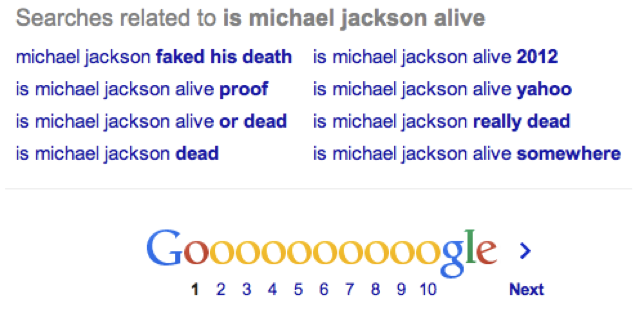
As you can see, it’s not so pretty. Of course, it is no surprise to see that Israel does not have the most positive image on the internet and online communities. With things like anti-Israel divestment campaigns and “apartheid weeks” on campuses across the nation, the negative Google results only continue to grow.

As with any negative, there is a positive. Post these 6 ways in to action online and we guarantee you are one step closer to turning that Google-frown upside down.

1) Tell Your Story

It all starts with you. Personal stories have proven to be the most effective strategy to positively re-brand Israel through social media outlets. Naturally, we are accustomed to empathizing with others rather than through common marketing tactics. A personal story builds a growing relationship between the reader, allowing audiences to finally be exposed to a personal and lasting connection with Israel which allows for that gradual shift in how people view Israel.

2) Share the Right Content

Finding content to post about Israel is easy if you know where to look. Instead of posting mainstream news articles about Israel, find unique content to share with your online community. Start now, search for these types of categories:

  • Heritage and Culture: History, authenticity
  • Quality of life: Personal stories and blogs
  • Tourism: Photos of travelers in Israel, articles or events in Israel, food in Israel.
  • Entrepreneurism: Technology/start-ups, medicine from Israel

3) Keep It Real

When finding a topic, it is important to try to find a common ground with your audience. Share relevant updates with friends that you know share these interests. Remember not to sound like you are trying to “market” Israel, this is personal storytelling strategy; just be yourself and keep it real.

4) Show And Tell

To be most effective and appealing, tell your story visually. Using photos or short videos are an incredible way to get your audience engaged. When posting, make sure to “tag” so you can engage a greater audience.

5) Find the Right Audience

Using the custom audience selectors (such as the friend option on Facebook) gives you the ability to choose which audience you want to see your post. Be selective by sharing with specific people, groups or networks that you belong to. You can even set up friend lists and send your post directly to them.

6) Get Personal

It is important to remember that though social media is an incredible innovation, it serves a basic human need that has existed for centuries – the need to communicate.

Taking the time for personal engagement with those posting away in your social media community is one of the most overlooked outreach tactics. Thank your followers, reply to their comments, show your appreciation, and ultimately build your reader’s loyalty.

Stay tuned to learn how to take the BOMAH storytelling strategy to the next level. In the next article, we will continue to discuss how to further engage your audience and give you the ultimate strategy on how to get people to like and comment on your stories.